


SpaceX’s Expansion Strategy Highlights the Growing Role of Real Estate in Advanced Manufacturing and AI
SpaceX’s public market debut is drawing attention not only to its valuation and technological ambitions, but also to one of the most extensive corporate real estate platforms assembled in the modern economy.
As the aerospace giant expands across advanced manufacturing, satellite communications, artificial intelligence, and next-generation infrastructure, its real estate strategy offers a glimpse into how the world’s most innovative companies are using physical assets to support long-term growth.
For commercial real estate professionals, the story is less about rockets and more about the evolving relationship between technology, infrastructure, and location strategy.
Real Estate as Strategic Infrastructure
Unlike traditional technology firms that primarily rely on office space, SpaceX has built a diversified real estate network that spans manufacturing facilities, research and development campuses, testing grounds, launch infrastructure, data centers, and workforce housing.
The company’s footprint now extends across multiple states, creating a vertically integrated ecosystem designed to support every stage of product development and deployment.
Rather than treating real estate as a support function, SpaceX has positioned physical infrastructure as a competitive advantage.
This approach allows the company to control critical operations, accelerate production timelines, and maintain flexibility as new business lines emerge.
The Rise of Specialized Industrial Real Estate
SpaceX’s expansion reflects a broader trend reshaping commercial real estate: the growing demand for highly specialized industrial and advanced manufacturing facilities.
Modern innovation sectors increasingly require infrastructure that goes beyond traditional warehouses or office campuses. Aerospace manufacturing, semiconductor production, robotics, satellite assembly, and artificial intelligence all depend on highly customized facilities capable of supporting sophisticated operations.
As a result, demand is increasing for large-scale industrial campuses with access to skilled labor, reliable utilities, transportation infrastructure, and supportive regulatory environments.
Markets capable of accommodating these requirements are becoming increasingly attractive to technology and manufacturing tenants.
New Growth Corridors Emerge
The company’s investments have also helped accelerate development in markets that historically sat outside traditional technology hubs.
South Texas, Florida’s Space Coast, Central Texas, Tennessee, and portions of the Pacific Northwest have all benefited from significant investment tied to aerospace, manufacturing, and technology infrastructure.
These locations offer a combination of land availability, lower operating costs, workforce development opportunities, and access to energy resources that are becoming increasingly important for large-scale industrial users.
The result is a growing redistribution of economic activity beyond legacy markets such as Silicon Valley and New York.
For investors and developers, these emerging corridors represent potential opportunities in industrial, multifamily, hospitality, retail, and supporting infrastructure sectors.
AI and Data Infrastructure Expand the Opportunity
One of the most notable aspects of SpaceX’s growth strategy is the increasing overlap between aerospace and artificial intelligence infrastructure.
As AI adoption accelerates, demand for data centers, energy resources, fiber connectivity, and specialized computing facilities continues to rise. Companies operating at the intersection of manufacturing and AI require substantial physical infrastructure to support both digital and industrial operations.
This convergence is creating new opportunities for commercial real estate developers focused on data centers, industrial campuses, utility infrastructure, and innovation districts.
The next generation of technology companies may require significantly more real estate than the software firms that defined the previous decade.
A New Model for Corporate Real Estate
SpaceX’s expansion demonstrates a corporate real estate strategy built around ownership, operational control, and long-term scalability.
In some markets, the company has acquired large land positions to support future development. In others, it utilizes strategic leasing arrangements to maintain flexibility while preserving capital.
This hybrid approach allows the company to scale rapidly while reducing exposure to changing market conditions.
More importantly, it reflects a growing trend among major corporations seeking greater control over mission-critical infrastructure rather than relying solely on third-party facilities.
What It Means for Commercial Real Estate
The implications extend far beyond a single company.
As industries such as aerospace, artificial intelligence, robotics, energy, and advanced manufacturing continue to expand, commercial real estate demand is likely to shift toward larger, more complex campuses capable of supporting integrated operations.
Developers, investors, and municipalities that can provide the necessary infrastructure—including power, connectivity, workforce housing, transportation access, and regulatory certainty—will be best positioned to attract future investment.
The competition for these projects is already intensifying as regions seek to become hubs for next-generation industries.
CRE Report Takeaway
SpaceX’s growth underscores an emerging reality across commercial real estate: innovation increasingly depends on physical infrastructure. The next generation of industry leaders will require more than office space—they will need manufacturing facilities, research campuses, data centers, testing grounds, and integrated workforce communities.
For CRE investors and developers, the lesson is clear. The future of technology real estate may be less about where people work and more about where innovation is built, manufactured, tested, and scaled.
About the Author

Some Related Posts
-
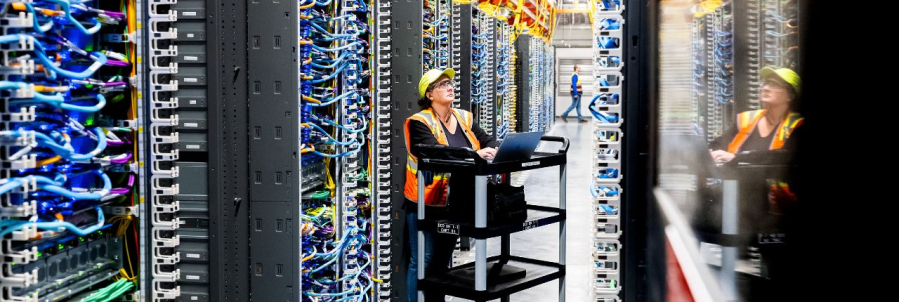
Seattle Draws a Line on AI Infrastructure as Data Center Growth Faces New Resistance
Seattle is poised to become the largest U.S. city to halt the development o